
ConvoTrack
Case study background

Large D2C brands wanted to experiment with trending skincare concepts in the US for their content strategy

Case Study • US Skincare Trends

Summary

A leading personal care brand sought to identify high-engagement content strategies and emerging trends in the US skincare market to inform their 2025 influencer marketing roadmap. Using Convotrack's advanced AI-powered influencer intelligence system, we analyzed 7.7K+ videos from 150+ influencers across Instagram, TikTok, and YouTube, processing a collective audience of 6.75 billion non-unique followers. Using Convotrack’s trend spotter, they identified key trending concepts categorized by engagement metrics, content type distributions, and influencer mix.

Digital Landscape Analyzed

  • 9.9K videos analyzed across TT, YT and IG

  • 👤

    150+ creator accounts analyzed across 3 platforms

  • 👏

    1 billion impressions

  • 💡

    8 billion trending concept vectors identified
Gallery image 1Gallery image 2Gallery image 3Gallery image 4

Details

Approach

Convotrack's Gen-AI engine used proprietary machine learning algorithms to extract multi-dimensional insights from unstructured video content across major social platforms. Our technology architecture performed natural language processing on captions, analyzed visual content patterns, and mapped engagement metrics against content taxonomies to generate statistically significant trend vectors. The system's computational framework classified content into distinct concept categories (Routine, Aesthetic, Proof-based, and Viral), providing quantifiable performance metrics for each content typology based on engagement rates and view accumulation patterns.

Analysis

The AI system performed deep computational analysis across multiple dimensions of the skincare content ecosystem:
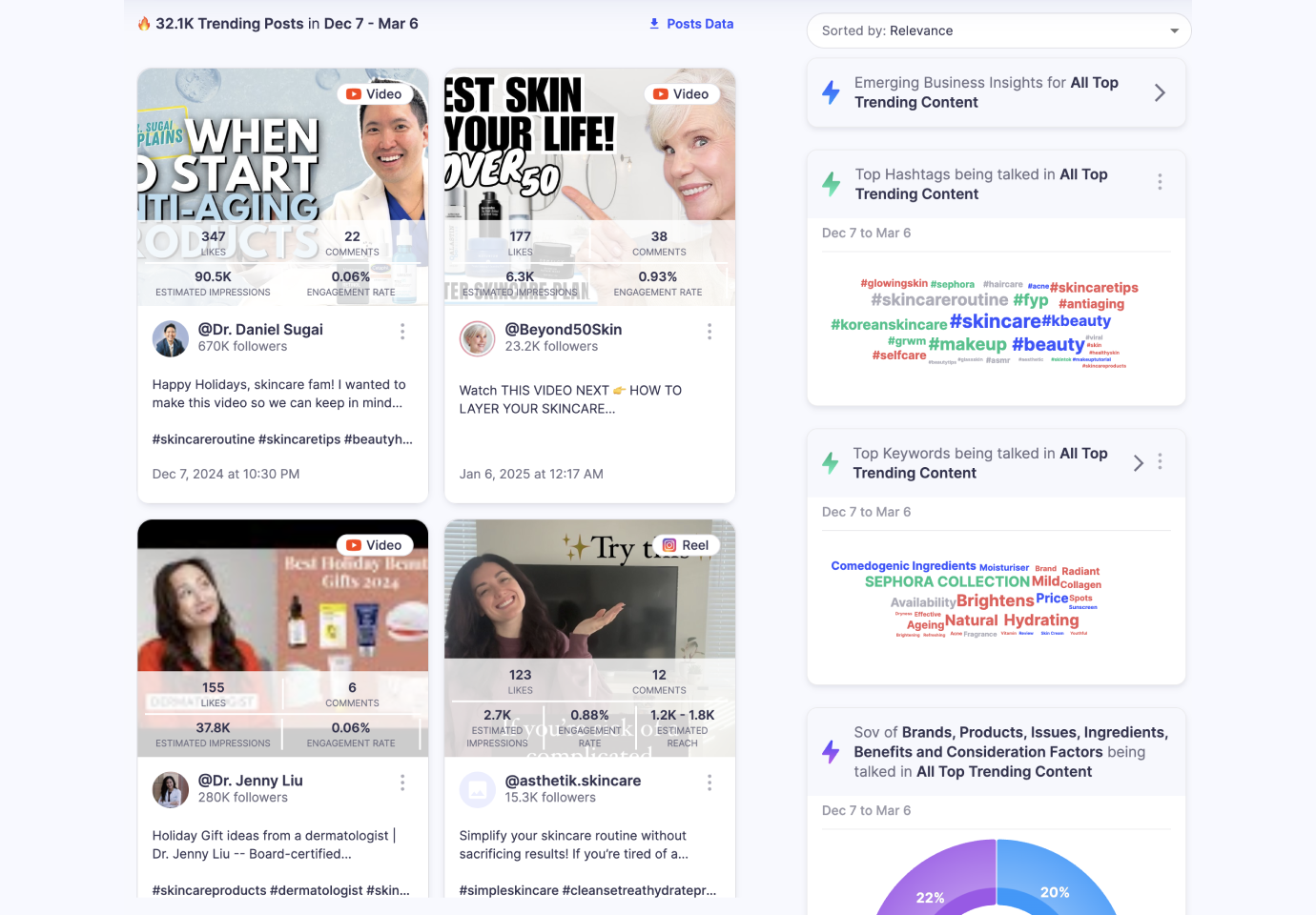
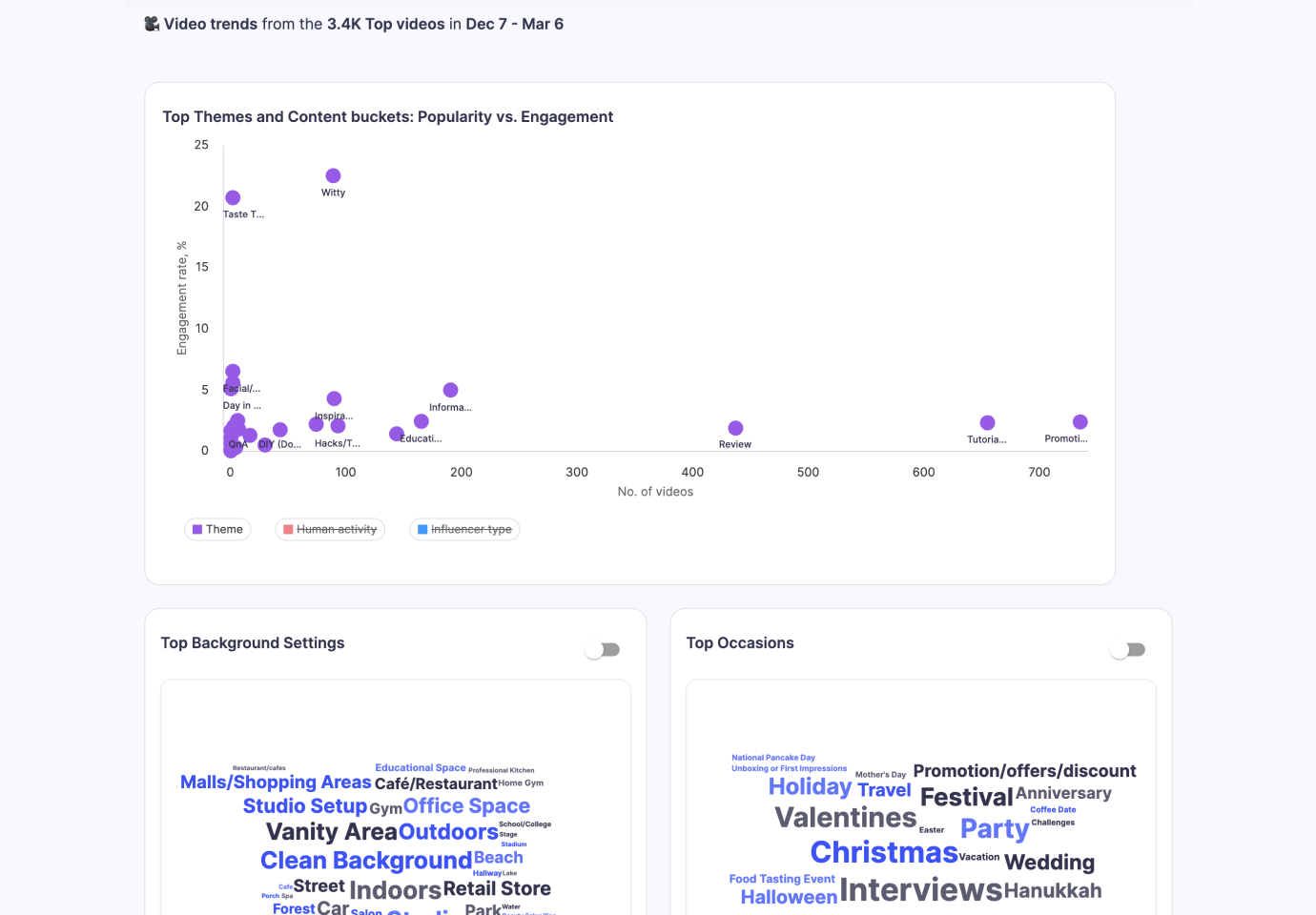
  • Trending Concept Quantification: The algorithm identified nine statistically significant content concepts showing above-average engagement rates, including "Unwind with me" (16% ER), "Skin Cycling" (14% ER), and "Vanilla Girl" (11% ER). Machine learning classification revealed that these concepts cluster into four distinct content categories.
  • Engagement-to-Views Correlation Analysis: Advanced pattern recognition detected inverse correlation patterns between engagement rates and total views for certain concepts, suggesting specific content types optimize for either deep engagement or broad reach—critical intelligence for targeted campaign planning.
  • Platform-Specific Behavioral Mapping: The system's cross-platform analysis revealed distinct content consumption patterns: Instagram optimized for aesthetics (60% of top-performing content), YouTube for educational content (50%), and TikTok for rapid-cycle viral concepts.
  • Product and Ingredient Sentiment Classification: Natural language processing detected emerging ingredient trends, including polyglutamic acid (54 mentions), beta glucan (43 mentions), and peptides (65 mentions), revealing consumer interest shifts toward science-backed formulations.
  • Consumer Decision Factor Correlation: AI-driven factor analysis revealed clinical results (42 mentions) and user reviews (38 mentions) as primary purchase consideration drivers, providing quantifiable metrics for messaging optimization.
Gallery image 1Gallery image 2

Key Takeaways

1. Content Strategy Matrix

The data revealed four distinct content strategy quadrants with statistically significant performance patterns. "Routine Concepts" generated the highest engagement (16% average ER) while "Aesthetic Concepts" accumulated highest view totals (55M across analyzed content), providing a quantifiable framework for campaign planning.

2. Predictive Trend Timeline

The system's temporal analysis identified precise opportunity windows for trend activation, including immediate opportunities (Audio Tracks: 48 hours), near-term windows (Unwind with me, Skincare Shelfie: 3 months), and seasonal timing (Inflight Skincare: December travel season).

3. Content Format Optimization

Format effectiveness analysis revealed differentiated performance patterns by concept, with ASMR elements boosting engagement by 35% for relaxation content and microscope visuals increasing retention by 42% for educational content.

4. Emerging Product Category Signals

The system detected early-stage signals for emerging product formats, including powder-to-foam textures, patch technology applications, and micro-dart delivery systems—providing actionable innovation pipeline intelligence.

5. Generation Alpha Indicators

Forward-looking content analysis identified statistically significant growth in younger demographic engagement (ages 10-14) with simplified skincare routines and educational content formats, signaling future market evolution.

The AI-generated insights provided the brand with a data-driven content strategy framework, optimizing resource allocation across high-performance concepts and enabling precise timing of campaign activation based on trend lifecycle analysis.