ConvoTrack
Case study background

Decoding Cultural Trends to Drive Deodorant Category Innovation

Case Study • Cultural Trend Analysis - USA

Summary

A leading personal care company set out to understand emerging consumer trends and cultural shifts across the US, UK, and Brazil to transform macro cultural category conversations into actionable innovation opportunities. The goal was to decode how evolving lifestyles, values, and preferences are shaping consumer perceptions of deodorants, while identifying white space opportunities in formats, functions, and messaging. By analyzing thousands of digital conversations, search behaviors, and influencer content, the study uncovered new growth pathways such as sustainability-driven narratives, multi-functional claims, and gender-neutral positioning. These insights provide a clear roadmap for developing product innovation and marketing strategies that ensure category leadership in the evolving deodorant market.

Digital Landscape Analyzed

  • đź’¬

    111,305 Comments

  • đź–Ľ 🎥

    5,345 Posts/Videos

  • 5 Platforms

Gallery image 1Gallery image 2Gallery image 3Gallery image 4

Details

Approach

A structured, multi-dimensional framework was applied to decode consumer and cultural signals
  • Cultural Trend Mapping: Tracked conversations across three key markets to identify macro and micro cultural shifts.
  • Search & Social Listening: Analyzed trending queries, consumer discussions, and viral content on TikTok, Instagram, YouTube, and forums.
  • Competitive Benchmarking: Assessed established and emerging players across sustainability, functional innovation, and messaging strategies.
  • Sentiment & Perception Analysis: Evaluated consumer trust, barriers, and adoption motivators around deodorant formats and claims.

Analysis

  • Cultural & Consumer Themes:
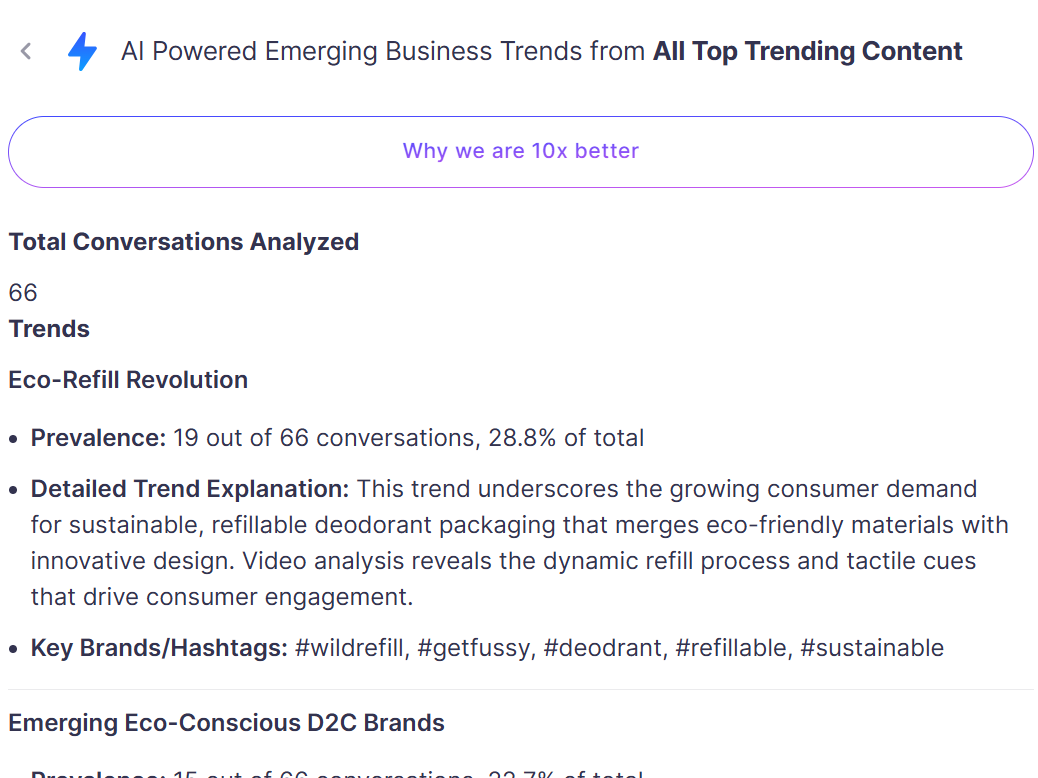
    • Sustainability as a Standard: Clean formulations, refill packs, and eco-friendly packaging emerged as baseline expectations.
    • Function + Lifestyle Fusion: Interest rose in deodorants that go beyond odor protection-offering skincare benefits, mood enhancement, or performance-boosting claims.
    • Gender-Neutral Appeal: Neutral scents and inclusive positioning resonated strongly with younger audiences, reducing reliance on traditional “for men/for women” segmentation.
  • Regional Insights:
    • US: Strong focus on clean labels, natural ingredients, and lifestyle integration.
    • UK: Conversations leaned toward sustainability, refill systems, and waste reduction.
    • Brazil: High emphasis on fragrance variety, freshness, and cultural rituals tied to daily hygiene.
  • Engagement Patterns:
    • TikTok & Instagram: Hacks, rituals, and “day-in-my-life” videos created virality for lifestyle-linked deodorant use.
    • YouTube: Long-form product explainers, dermatologist reviews, and brand storytelling built credibility.
    • Forums & Search: High intent-driven queries reflected unmet needs in sustainability, skin sensitivity, and multifunctionality.
  • Competitive Gaps:
    • Legacy players were strong in trust and efficacy but lacked agility in cultural relevance.
    • Emerging challengers captured traction by aligning with sustainability, niche formats, and inclusive branding.
    • White space opportunities lay in hybrid formats (deodorant + skincare), functional storytelling, and gender-fluid marketing.
Gallery image 1Gallery image 2

Key Takeaways

1. Sustainability = Baseline:

Eco-conscious innovation and communication must be non-negotiable.

2. Beyond Protection:

Position deodorant as a lifestyle enhancer—covering skincare, mood, and holistic wellness.

3. Inclusive Narratives:

Gender-neutral scents and cultural inclusivity win with younger demographics.

4. Platform Strategy:

Lean into TikTok for rituals, Instagram for aesthetics, and YouTube for credibility.

5. Cultural Tailoring:

Localize innovation—fragrance-led in Brazil, eco-driven in the UK, and functional in the US.

Conclusion

For deodorants, future growth will be defined by how well companies integrate cultural trends with functional innovation. By decoding emerging shifts across US, UK, and Brazil, brands can identify whitespace opportunities that balance sustainability, inclusivity, and multifunctional benefits. Success will depend on creating deodorant solutions that are not only effective but also culturally resonant, emotionally relevant, and innovation-led—ensuring category leadership in an evolving global landscape.